Detailed product information
Key characteristics
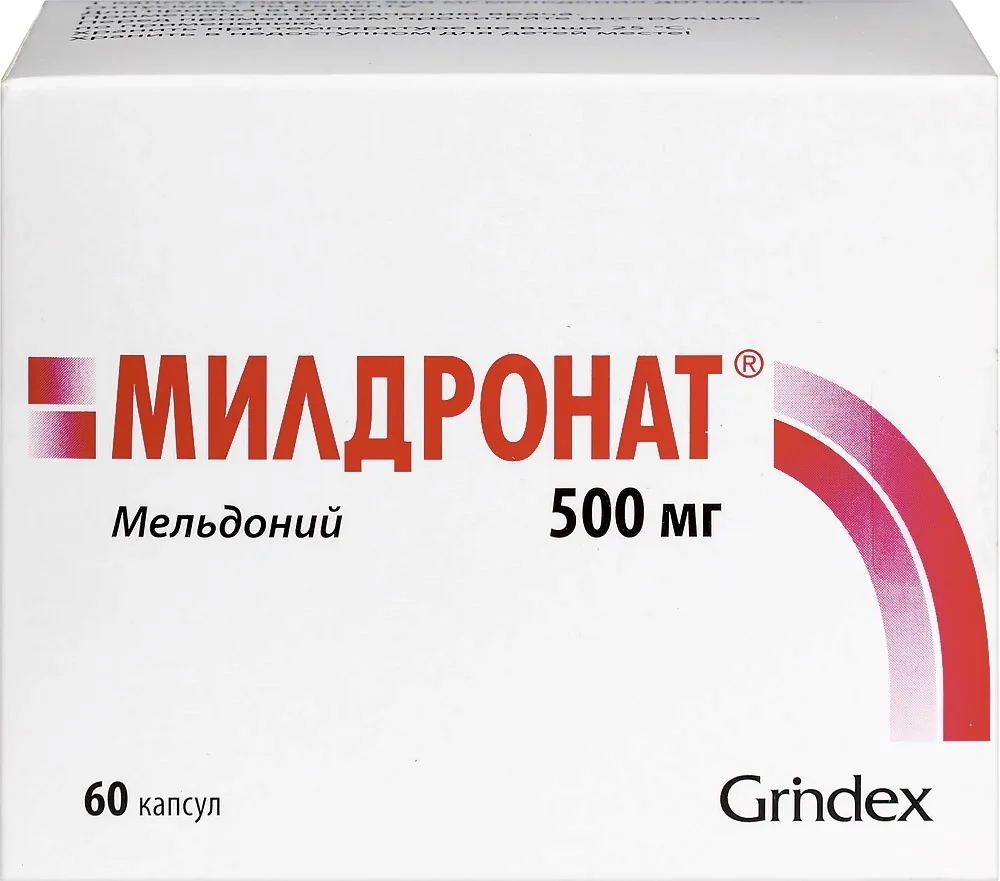
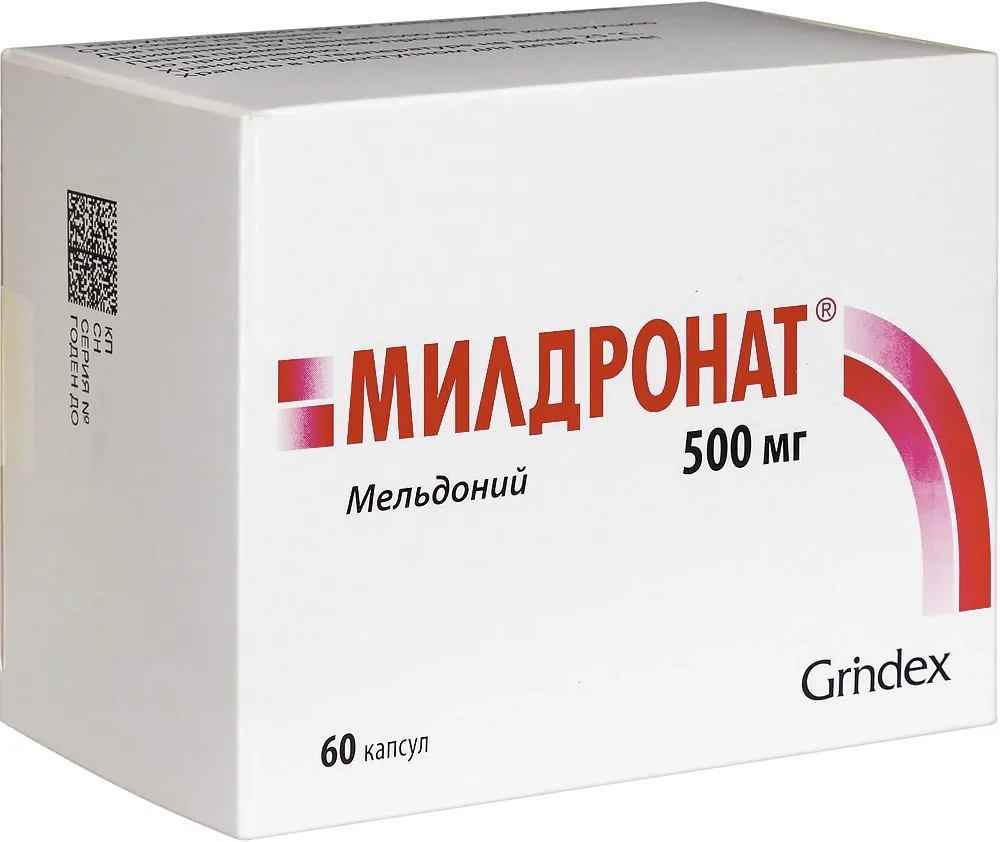
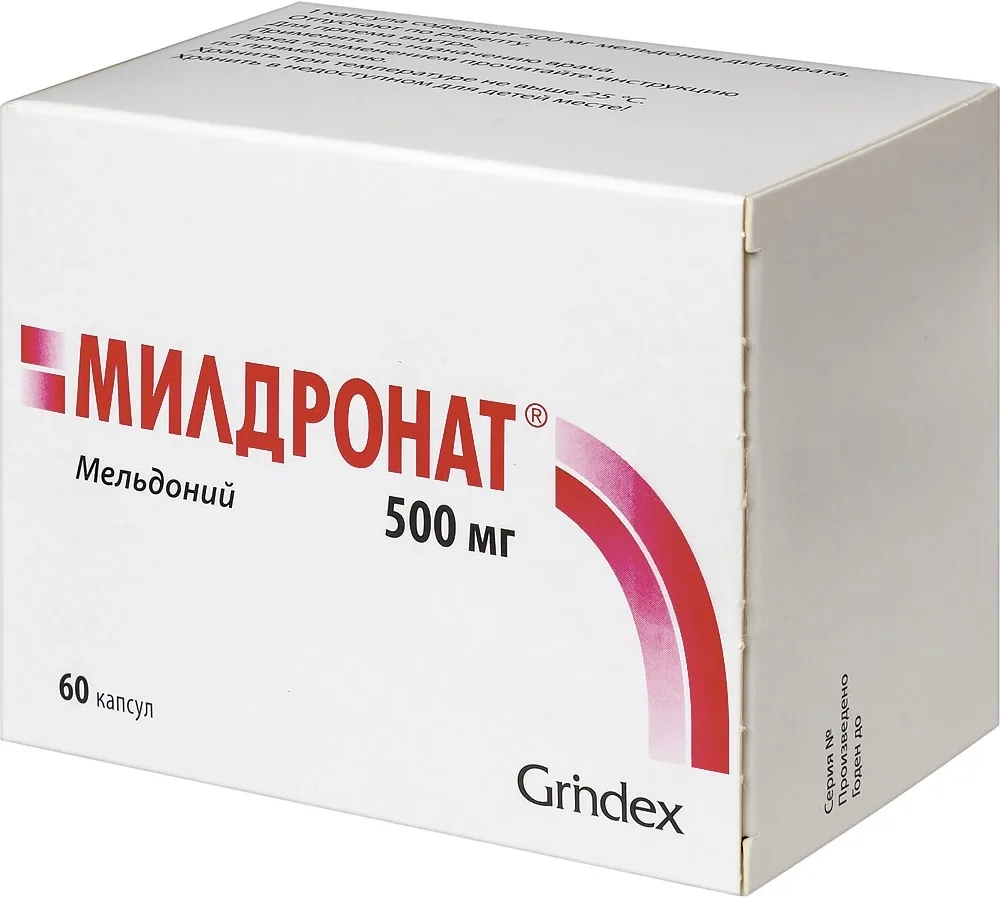
• Trade name: Mildronate®
• Strength: 500 mg
• Package quantity: 60 capsules
• Active ingredient: meldonium dihydrate — 500 mg per capsule
• Manufacturer: Grindeks JSC
• Country of manufacture: Latvia
• Status: prescription medicine where applicable; medical supervision is required
Directions and dosage
The capsules are taken orally. Because a stimulating effect may occur, dosing is recommended in the first half of the day; when several daily doses are used, the last dose should be taken no later than 5:00 p.m. The specific regimen must be prescribed by a clinician.
Ischemic heart disease (angina or myocardial infarction) and chronic heart failure: as part of combination therapy, 500 mg–1 g daily, taken as one dose or divided into two doses. The course is 4–6 weeks.
Dyshormonal cardiomyopathy: as part of combination therapy, 500 mg once daily for 12 days.
Subacute and chronic disorders of cerebral blood supply: after completion of an injectable Mildronate course, continue with 500 mg–1 g orally per day, taken at once or divided into two doses, for 4–6 weeks. For chronic disorders, the labeled regimen is 500 mg daily as part of combination therapy for a total of 4–6 weeks. Repeat courses, usually 2–3 times a year, may be considered only after consultation with a physician.
Reduced performance or mental and physical overload: adults take 500 mg twice daily for 10–14 days. If needed, the course may be repeated after 2–3 weeks.
For athletes, the labeling lists 500 mg–1 g twice daily before training: 14–21 days during the preparatory period and 10–14 days during competition. Use requires a clinician's prescription and supervision.
Alcohol-withdrawal syndrome in chronic alcoholism: together with specific therapy, 500 mg four times daily for 7–10 days.
Indications
As part of combination therapy: ischemic heart disease, including angina and myocardial infarction; chronic heart failure; dyshormonal cardiomyopathy; and subacute or chronic disorders of cerebral blood supply, including post-stroke states and cerebrovascular insufficiency. The labeling also lists reduced performance, mental and physical overload, including in athletes, and alcohol-withdrawal syndrome in chronic alcoholism together with specific therapy.
Composition
Each capsule contains 500 mg of meldonium dihydrate. Excipients: dried potato starch — 27.2 mg, silicon dioxide — 10.8 mg, and calcium stearate — 5.4 mg. Capsule body and cap: titanium dioxide (E171) — 2%, gelatin — up to 100%.
Contraindications
Hypersensitivity to meldonium or any excipient; increased intracranial pressure, including cases associated with impaired venous outflow or intracranial tumors; age under 18 years because efficacy and safety have not been established; pregnancy; and breastfeeding. Caution is required in people with liver and/or kidney disease. Safety during pregnancy has not been established, so use is not recommended. It is unknown whether meldonium passes into breast milk; if treatment is necessary for the mother, breastfeeding should be discontinued.
Special warnings
Patients with chronic liver or kidney disease should use caution and remain under medical supervision during prolonged treatment. There are insufficient data for use in children and adolescents under 18 years. No data indicate an adverse effect on the ability to drive or operate machinery. Do not change the dose or treatment duration without consulting a clinician.
Packaging and dosage form
500 mg capsules. The pack contains 60 capsules and the patient information leaflet.
Adverse effects
Rarely reported reactions include allergy-related skin redness or itching, rash, urticaria, and angioedema; dyspeptic symptoms, tachycardia, decreased or increased blood pressure, and increased excitability have also been reported. Eosinophilia and general weakness have been reported very rarely. Seek medical advice for any severe or unusual reaction.
Pharmacotherapeutic group
Medicines for the treatment of heart diseases; other medicines for the treatment of heart diseases.
Interactions
Meldonium may enhance the effects of coronary vasodilators, some antihypertensive medicines, and cardiac glycosides. The labeling allows use with prolonged-release nitrates, other antianginal medicines, anticoagulants, antiplatelet medicines, antiarrhythmics, diuretics, and bronchodilators. Because tachycardia and arterial hypotension may occur, caution is needed with sublingual nitroglycerin and antihypertensive medicines, particularly alpha-blockers and short-acting nifedipine. Tell the prescriber about all medicines you use.
Pharmacodynamics
Meldonium is a synthetic analogue of gamma-butyrobetaine. It inhibits gamma-butyrobetaine hydroxylase, reduces carnitine synthesis and the transport of long-chain fatty acids across cell membranes, and limits the intracellular accumulation of activated derivatives of unoxidized fatty acids. According to the labeling, under ischemic conditions this mechanism helps maintain the balance between cellular oxygen delivery and demand, helps prevent disruption of ATP transport, and activates glycolysis without additional oxygen consumption. Reduced carnitine levels are accompanied by increased formation of gamma-butyrobetaine, which has vasodilating properties.
The labeling associates this mechanism with cardioprotective activity, exercise tolerance, and reduced manifestations of physical and mental overstrain. It also describes effects on recovery after ischemic myocardial injury, cardiac performance in heart failure, circulation in ischemic areas of the brain, and nervous-system dysfunction during alcohol withdrawal. These statements do not replace an individual clinical assessment of benefits and risks.
Storage temperature
Store at 2–25 °C (36–77 °F) and keep out of the reach of children.
Dosage form
No. 00 hard gelatin capsules with a white body and cap. The contents are a white, hygroscopic crystalline powder with a slight odor.
Pharmacokinetics
After oral administration, meldonium is rapidly absorbed; bioavailability is 78%. Peak plasma concentration is reached in 1–2 hours. It is metabolized mainly in the liver into two principal metabolites that are excreted by the kidneys. The elimination half-life is dose-dependent and ranges from 3 to 6 hours.
Overdose
Possible symptoms are decreased blood pressure accompanied by headache, tachycardia, dizziness, and general weakness. Treatment is symptomatic. Seek medical attention if overdose is suspected.
|



Reviews
There are no reviews yet.