


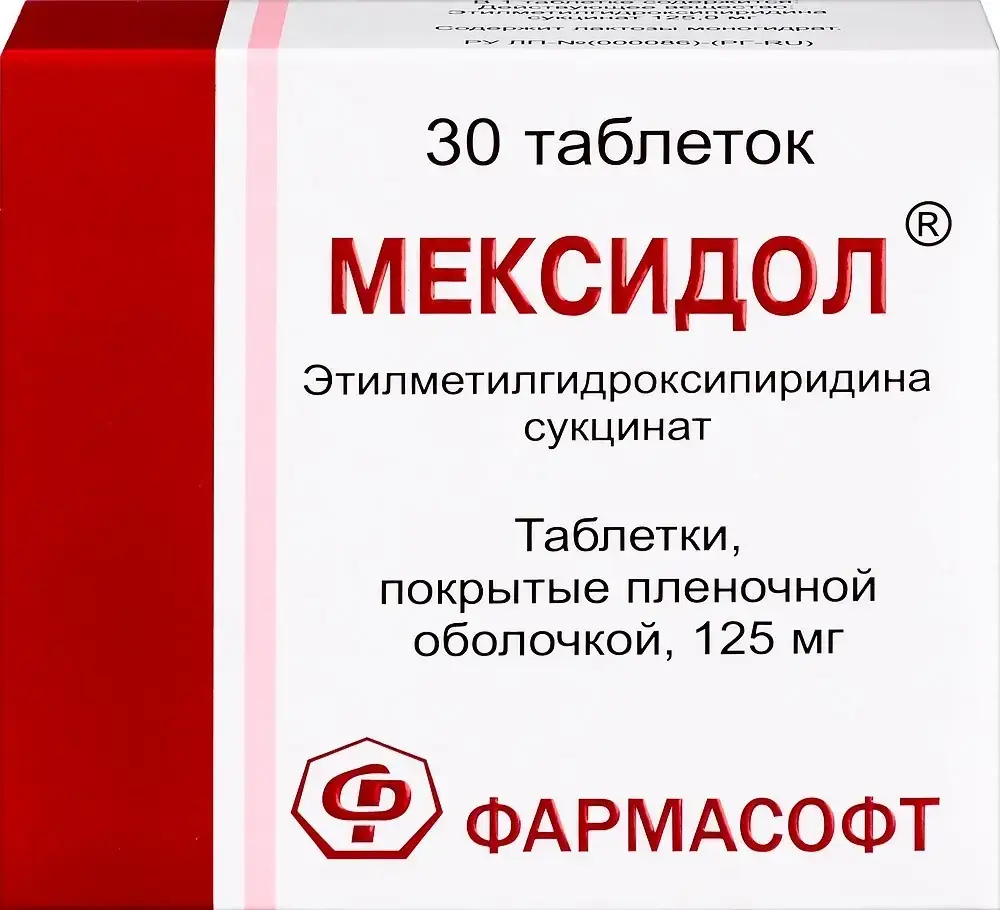
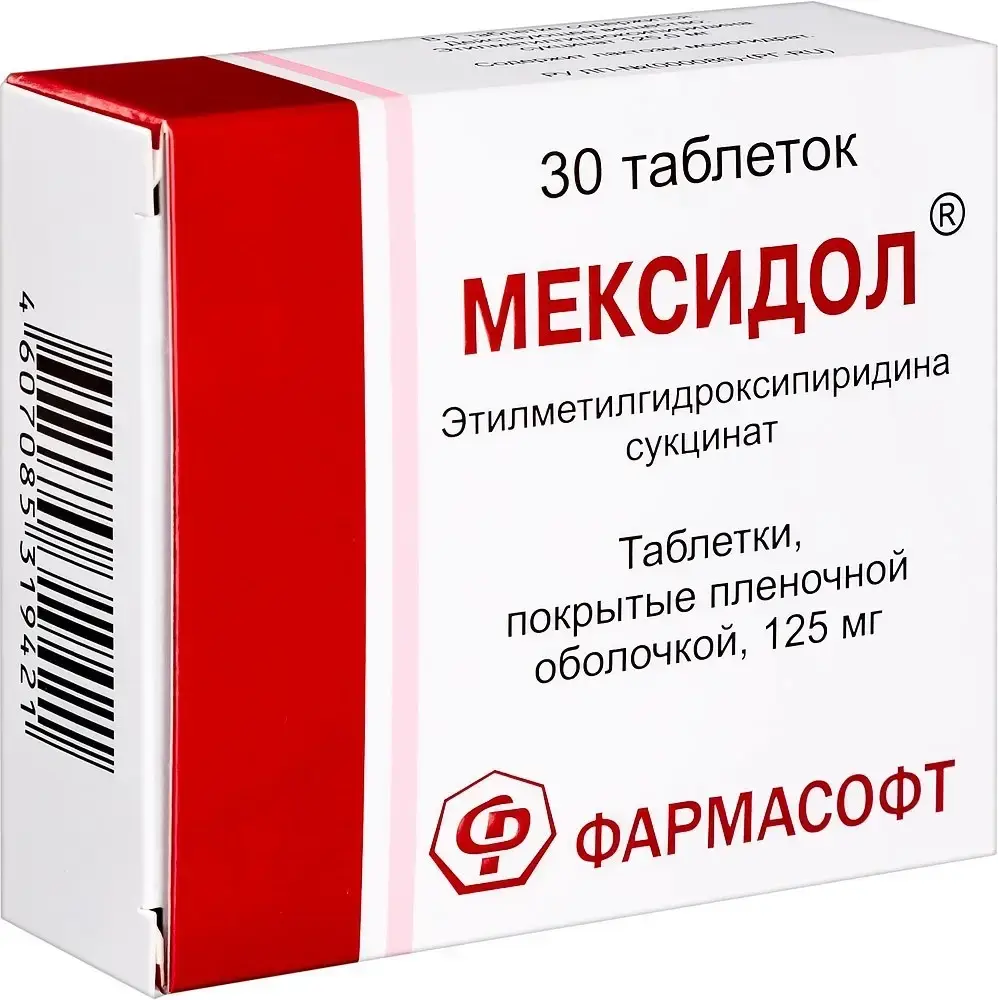
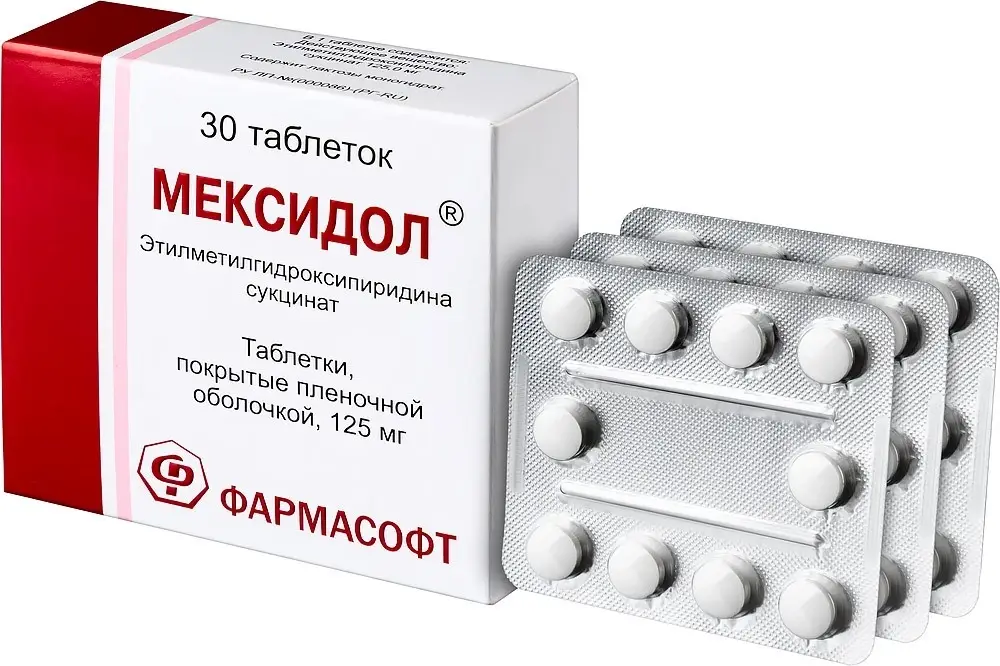
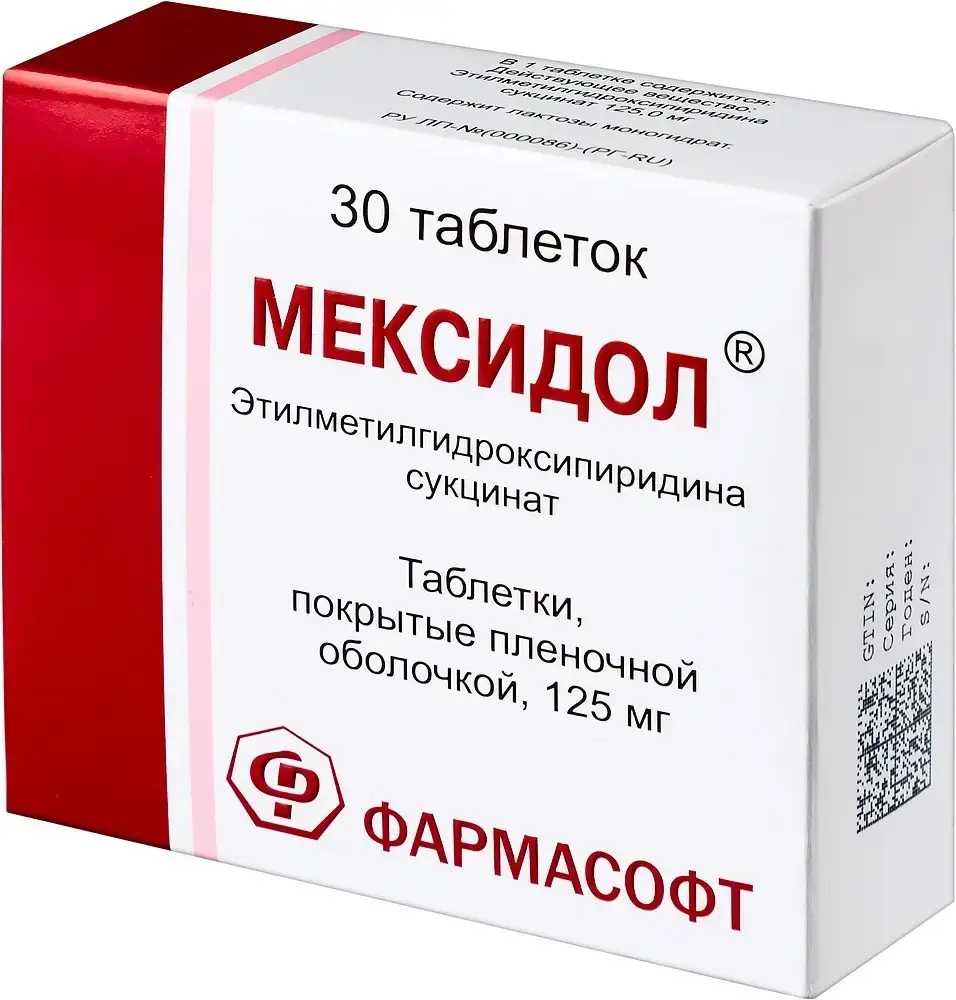
- Product name: Mexidol 125 mg, 30 tablets
- Expiry: Jul 2031
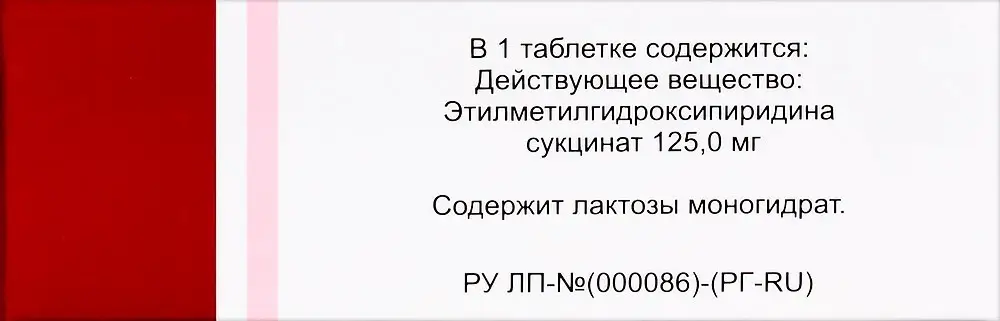
- Active ingredient: Emoxypine succinate (ethylmethylhydroxypyridine succinate), 125 mg per tablet
- Dosage form: Film-coated tablets, 30 count
- Manufacturer: Pharmasoft
- Country of manufacture: Russia
- Availability: In Stock at US warehouse
Directions:
Always use the medicine exactly as recommended by your treating physician. If you are unsure, consult your physician. The initial dose is 1–2 tablets (125–250 mg) 1–2 times daily, gradually increasing until a therapeutic effect is achieved. The stated adult oral dose is 1–2 tablets (125–250 mg) 3 times daily; the maximum daily dose is 6 tablets (750 mg).
For treatment of the consequences of acute cerebrovascular disorders, including after transient ischemic attacks, the tablets are prescribed after a course of the medicine as an intravenous or intramuscular solution. For children with attention-deficit/hyperactivity disorder, including hyperactivity, impaired attention, and impulsivity, the leaflet states 1 tablet (125 mg) twice daily. Your treating physician may change the dose.
For oral use, swallow the tablet whole with water; do not break it. Treatment duration is 2–8 weeks. For children treated for attention-deficit/hyperactivity disorder, the leaflet states 6 weeks. For people with ischemic heart disease, it states at least 6–8 weeks. Repeat courses, on a physician’s recommendation, are preferably in spring and autumn. For alcohol-withdrawal syndrome, the stated duration is 5–7 days; treatment is stopped gradually by reducing the dose over 2–3 days. Do not use this translation to select a dose or treatment course.
The phrase buy mexidol 125mg usa is a search term, not a dosing instruction. The specific regimen must be determined by a qualified healthcare professional.
Indications stated in the supplied leaflet
The Russian-language leaflet states use for: consequences of acute cerebrovascular disorders, including after transient ischemic attacks, in the initial/subcompensation stage as preventive courses; mild traumatic brain injury and its consequences; encephalopathies of various origins (circulatory, metabolic, post-traumatic, or mixed); autonomic dystonia syndrome; mild cognitive impairment of atherosclerotic origin; anxiety disorders in neurotic and neurotic-like conditions; ischemic heart disease as part of combination therapy; alcohol-withdrawal syndrome in chronic alcoholism with predominantly neurotic and autonomic-vascular disorders and delayed post-withdrawal disorders; conditions after acute intoxication with antipsychotic medicines; asthenic conditions and prevention of somatic diseases under extreme factors and stress; and attention-deficit/hyperactivity disorder in children, including hyperactivity, impaired attention, and impulsivity.
These are statements from the supplied foreign-language leaflet and are not U.S. indications. If you searched for buy mexidol 125mg usa, consult a licensed healthcare professional about applicable local requirements before considering any use.
Composition
Each tablet contains 125.0 mg of ethylmethylhydroxypyridine succinate. Excipients: lactose monohydrate, povidone K-30, and magnesium stearate. Film coating: hypromellose, titanium dioxide, lactose monohydrate, macrogol, and triacetin. The leaflet states that the product contains lactose.
Contraindications
Do not use, according to the supplied leaflet, if you are allergic to ethylmethylhydroxypyridine succinate or any other ingredient; have acute liver or kidney dysfunction; are under 6 years of age; are pregnant or breastfeeding; or have intolerance to certain sugars (the product contains lactose). The source leaflet says use is contraindicated during pregnancy and breastfeeding.
Warnings and precautions
Consult your treating physician before use. Tell your physician if you have intolerance to certain sugars because the product contains lactose. Use in children younger than 6 years is not recommended in the supplied leaflet because of insufficient efficacy and safety data. If you are pregnant, breastfeeding, think you may be pregnant, or plan to become pregnant, consult a healthcare professional; the leaflet states the medicine is contraindicated during pregnancy and breastfeeding. Use caution when driving or operating machinery or performing tasks requiring quick psychomotor reactions.
A search for buy mexidol 125mg usa cannot replace a clinician’s assessment of contraindications, interactions, or local regulatory status.
Pack and dosage form
Film-coated tablets, 125 mg; 30 tablets per package, supplied with instructions for use.
Possible adverse reactions
As with other medicines, the supplied leaflet reports possible adverse reactions, although they do not occur in everyone. Very rare reported reactions (up to 1 in 10,000 people) include a serious allergic reaction such as difficulty breathing or swelling of the face, neck, lips, tongue, or throat (angioedema); itchy allergic rash (urticaria); drowsiness; headache; dry mouth; nausea; stomach/epigastric pain, burning, or discomfort; heartburn; flatulence; diarrhea; rash; itching; and skin redness. Seek medical attention for a severe or unusual reaction.
Pharmacotherapeutic group
Antioxidant agent, as stated in the supplied leaflet.
Interactions
Tell your treating physician about medicines you take, have recently taken, or may take. The supplied leaflet says the medicine may be used with medicines for somatic diseases and may enhance the effects of sedatives or sleeping medicines (for example, diazepam or midazolam), antidepressants, medicines for anxiety (including phenibut), antiepileptic medicines (including valproate or lamotrigine), and antiparkinsonian medicines. It also states that the medicine reduces the toxic effects of ethyl alcohol. Do not infer that a combination is appropriate for you; obtain professional advice.
Pharmacodynamics stated in the supplied leaflet
The leaflet identifies ethylmethylhydroxypyridine succinate as the active ingredient and classifies it as an antioxidant. It describes proposed activity related to oxidative processes in nervous and cardiovascular diseases and alcohol or medicine intoxication, and states that the medicine may increase resistance to damaging factors associated with shock, tissue hypoxia, ischemia, cerebrovascular disorders, and certain intoxications. These statements are translated from the supplied leaflet and are not independent evidence of clinical benefit in the United States.
Storage
Store at 2–25 °C, according to the supplied leaflet.
Appearance
Round, biconvex, film-coated tablets, white to white with a yellowish tint; the supplied leaflet notes a characteristic odor may be present.
Pharmacokinetics stated in the supplied leaflet
The leaflet states that the medicine is rapidly absorbed after oral use; the maximum concentration after doses of 400–500 mg is 3.5–4.0 μg/mL; it distributes rapidly in organs and tissues; average retention after oral use is 4.9–5.2 hours; it is metabolized in the liver by glucuronidation; and it is mainly excreted in urine as metabolites, with a smaller amount unchanged. The leaflet reports an oral half-life of 2.0–2.6 hours and says excretion is most intensive during the first 4 hours. These translated statements are not a U.S. prescribing recommendation.
Overdose and missed dose
The supplied leaflet says overdose may cause drowsiness or insomnia and that symptoms generally resolve on their own within 24 hours; seek medical care for pronounced symptoms. If a dose is missed, do not take a double dose to make up for it; take the next dose at the usual time. If you have questions about use, contact a healthcare professional.
References:
- Gruber W (1953). “Synthesis of 3-Hydroxy-2-alkylpyridines”. Canadian Journal of Chemistry. 31 (6): 564–568. doi:10.1139/v53-079.
- “mexidol.ru, Pharmasoft Website”. Archived from the original on 2011-04-10. Retrieved 2011-04-27.
- Likhacheva EB, Sholomov II (2006). “[Clinical and immunological assessment of efficacy of mexidol in the treatment of lumbosacral radiculopathy]”. Zhurnal Nevrologii I Psikhiatrii imeni S.S. Korsakova. 106 (10): 52–7. PMID 17117675.
- Volchegorskii IA, Miroshnichenko IY, Rassokhina LM, Faizullin RM, Malkin MP, Pryakhina KE, et al. (April 2015). “Comparative analysis of the anxiolytic effects of 3-hydroxypyridine and succinic acid derivatives”. Bulletin of Experimental Biology and Medicine. 158 (6): 756–61. doi:10.1007/s10517-015-2855-3. PMID 25894772. S2CID 6052275.
- Rumyantseva SA, Fedin AI, Sokhova ON (October 2012). “Antioxidant Treatment of Ischemic Brain Lesions”. Neuroscience and Behavioral Physiology. 42 (8): 842–845. doi:10.1007/s11055-012-9646-3. S2CID 39971165.
- Voronina TA. “ANTIOXIDANT MEXIDOL. The main neuropsychotropic effects and the mechanism of action”. Institute of Pharmacology. Moscow, Russia: Russian Academy of Medical Sciences. Archived from the original on 2013-11-05.
- Gupta DS, Bagwe Parab S, Kaur G (1 January 2022). “Promising effects of emoxypine and its succinate derivative in the management of various diseases-with insights on recent patent applications”. Current Research in Pharmacology and Drug Discovery. 3 100121. doi:10.1016/j.crphar.2022.100121. PMC 9389226. PMID 35992374.
- Dumayev KM, Voronina TA, Smirnov LD (1995). Antioxidants in the prophylaxis and therapy of CNS pathologies (Report). Moscow.[page needed]
- Kucherianu VG (January 2001). “[Mexidol potentiates antiparkinsonian effect of L-DOPA in MPTP-induced parkinsonism model]”. Eksperimental’naia i Klinicheskaia Farmakologiia. 64 (1): 22–5. PMID 11544797.
- Da Costa BR, Pereira TV, Saadat P, Rudnicki M, Iskander SM, Bodmer NS, et al. (2021). “Effectiveness and safety of non-steroidal anti-inflammatory drugs and opioid treatment for knee and hip osteoarthritis: Network meta-analysis”. BMJ (Clinical Research Ed.). 375 n2321. doi:10.1136/bmj.n2321. PMC 8506236. PMID 34642179.
Reviews
There are no reviews yet.